Need help? Call Us: (956) 712-2156
1419 Market St. Laredo, TX 78041
Email : hello@championcareinc.com

How to insure caregiver drivers is something every home care agency and family should think about. When a caregiver offers senior transportation or drives a client to appointments, the right auto insurance matters. It is not just paperwork. It is protection. Caregiver car insurance can protect the driver, the passenger, and the vehicle in the event of an accident or damage. It also gives families peace of mind. They know their loved ones are safe on the road. A caregiver may use their car or the client’s car. In both cases, the right coverage lowers risk and avoids considerable costs. This guide shows the best insurance choices and how to keep everyone safe while traveling.
Driving a senior or a person with health issues is not the same as a regular trip. Caregiver drivers carry a bigger responsibility. They need to think about the passenger’s comfort, safety, and any medical needs. That is why having caregiver car insurance is so important. It protects everyone in the vehicle. It also helps home care agencies and families avoid stress if something goes wrong. When you insure caregiver drivers, you do more than follow the rules. You show you value safety. You protect the people you care for, the driver, and the vehicle itself.
Transporting seniors or medically fragile individuals can be unpredictable. Some passengers may need help getting in and out of the car. Others may use wheelchairs, walkers, or oxygen tanks. These situations can lead to accidents or injuries if not handled with care. Even minor bumps or sudden stops can cause harm. That is why senior transportation insurance is so vital.
Good auto insurance for caregivers covers medical costs, vehicle repairs, and legal fees after an accident. It can also cover the passenger’s medical bills if they get hurt during the trip. This means caregivers do not have to pay out of their pocket. Families can feel safe knowing their loved one’s care will not be disrupted.
Proper coverage tells clients you take your work seriously. It builds trust between caregivers, families, and agencies. Families want to know their loved ones are in safe hands, both on the road and in legal matters. For a caregiver, having the right policy is not just about driving. It is about being a responsible professional.
When you drive as a caregiver, having the right insurance protects you, your client, and your vehicle. Different policies cover different risks. Knowing which ones matter helps you choose the best coverage. This keeps everyone safe and avoids considerable costs later.
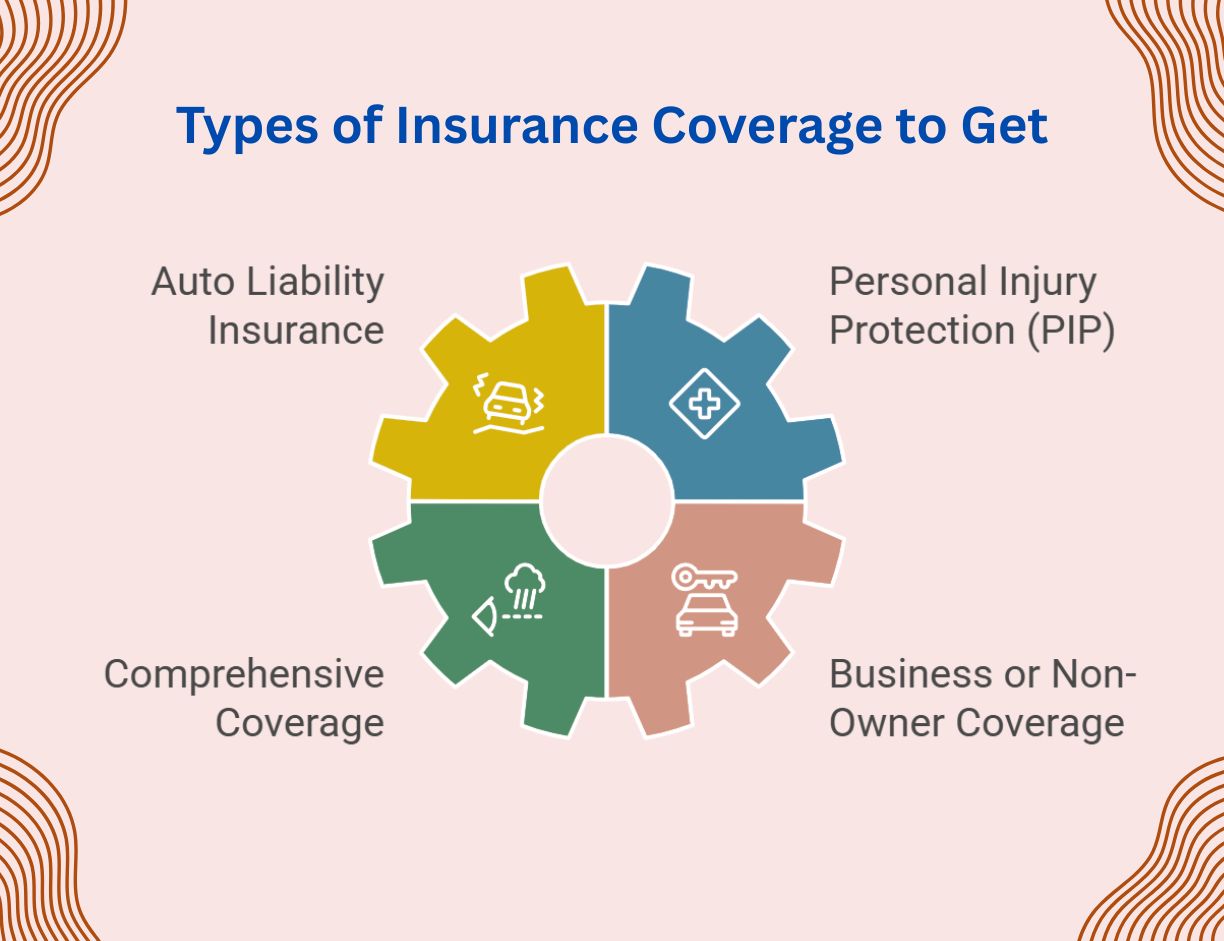
Auto liability insurance covers injuries or damage you cause to others in an accident. For example, if you hit another car or injure someone, this insurance covers the costs. It protects both you and your client from paying out of pocket. This type of coverage is required by law in most places. It is the basic protection every caregiver driver needs.
Personal Injury Protection, or PIP, covers medical costs for you and your passengers after a crash. It helps cover doctor visits, hospital stays, and other healthcare expenses. What makes PIP special is that it covers costs no matter who caused the accident. This helps caregivers and clients get quick medical care without worrying about bills.
Comprehensive coverage protects your vehicle from non-collision damage. This means it covers theft, vandalism, fire, and damage from weather events such as storms or hail. If your caregiver driver uses their car, comprehensive insurance is critical. It keeps the vehicle safe from risks other than crashes.
Sometimes caregivers drive a client’s car instead of their own. In this case, a special type of insurance called business or non-owner coverage helps. This insurance protects the caregiver while they use the client’s vehicle. It is also helpful if a caregiver regularly drives different cars. Without this coverage, insurance claims can become complicated or even be denied.
Choosing the right mix of insurance keeps caregiver drivers ready for the road. It also shows families and agencies that safety comes first. If you’re unsure about which policies to get, talk to an insurance agent who understands senior transportation and home care. They can help you find a plan that fits your needs and keeps everyone protected.
Knowing who owns and drives the car helps you choose the right insurance. Caregiver drivers sometimes use their vehicles. Other times, they drive the client’s car. Each case requires different insurance steps to ensure everyone’s safety. Understanding this makes a big difference in coverage and cost.
If a caregiver drives the client’s car, the client’s insurance usually covers most risks. This can be safer because the client’s vehicle gets regular checks and maintenance. However, the caregiver should still be added to the client’s auto insurance policy if they frequently drive the client’s vehicle. This step helps prevent denied claims in the event of an accident. Using the client’s car also means the client’s insurance might pay for medical transportation coverage. This protects both the passenger and driver. It shows the family that the caregiver takes safety seriously.
Sometimes caregivers use their car for work. When this happens, they must have strong insurance. This includes liability insurance, medical payments, and uninsured motorist coverage. These protect the caregiver if they cause an accident or are injured by an uninsured driver. Caregivers should also check that their personal car insurance allows business use. Some policies don’t cover driving clients regularly. If needed, they can get special business auto insurance for home care workers.
Understanding who owns the vehicle helps families and agencies avoid costly problems. Without proper insurance, claims may be denied or expenses borne by caregivers or clients. It can also cause legal troubles. By knowing who drives and who owns the car, everyone can find the best insurance option. This keeps senior transportation safe, smooth, and worry-free.
Understanding how insurance costs change helps caregivers and families plan more effectively. Several factors can cause premiums to fluctuate. Understanding these factors enables you to find the best coverage at a fair price.

Insurance companies check the caregiver’s driving record before setting rates. A clean record with no accidents or tickets usually means lower costs. If a caregiver has a history of accidents or violations, insurance may cost more. More driving experience can also help lower premiums because it shows the driver is safer.
The kind of car a caregiver drives affects insurance prices. Newer vehicles equipped with safety features such as airbags, anti-lock brakes, or backup cameras often receive discounts. Larger or older vehicles may cost more to insure because they can cause greater damage or be more difficult to repair.
Insurance rates change depending on where the caregiver drives. Urban areas with heavy traffic tend to have higher rates due to the increased frequency of accidents. Rural areas may have lower costs, but be aware of potential risks such as rough roads or wildlife. The local crime rate can also affect premiums, especially for theft or vandalism coverage.
Some insurance companies offer lower rates to caregivers who have specialized training or certifications in senior care or safe driving. These demonstrate that the caregiver takes safety seriously and reduces risk. Families and agencies should ask their insurer if such discounts apply. By understanding these factors, caregivers and families can select the most suitable auto insurance for their needs. This helps keep senior transportation safe and affordable.
Hiring the right caregiver driver means more than just finding someone who can drive. It also means ensuring they have the appropriate insurance to protect themselves and their clients. Following best practices helps keep everyone safe and reduces risks.
Before hiring, always check the caregiver’s motor vehicle record. This helps spot any past accidents or violations that could affect safety. Hiring someone with a clean driving record reduces the likelihood of accidents and legal issues.
It’s a good idea to ask the caregiver to take a test drive. This lets you see how they handle the vehicle and care for passengers. You can check if they drive carefully and follow road rules, especially when transporting seniors or people with medical needs.
Make clear what you expect from caregiver drivers. This includes how to assist passengers, when to stop, and how to drive safely. Clear rules reduce confusion and help the caregiver provide professional, reliable service.
Make sure the caregiver has the correct type of insurance before they start driving. Check that their coverage fits the senior transportation needs. This includes liability, personal injury protection, and comprehensive coverage.
Keep copies of the caregiver’s insurance documents, driver’s license, and any training certificates. Review these regularly to ensure everything is up to date. Staying organized helps when you need to file a claim or prove coverage. Following these steps allows agencies and families find responsible caregiver drivers. It also demonstrates to clients that safety and care come first on every trip.
Ensuring caregiver drivers is key to keeping everyone safe on the road. Proper insurance protects caregivers, clients, and families from unexpected costs and legal troubles. Whether a caregiver uses their car or drives the client’s vehicle, the right coverage makes a big difference.
Having insurance also shows professionalism. It builds trust between caregivers, families, and agencies. When everyone knows the caregiver is adequately insured, they can focus on what matters most: providing excellent care.
At Champion Care Inc., safety is a top priority. Understanding how to ensure caregiver drivers helps make transportation safer and less stressful for seniors and their loved ones.
If you’re a family member, caregiver, or agency, take time to review insurance options. Choose coverage that fits your needs. Doing so keeps every trip smooth and worry-free.
Caregiver drivers transport seniors or people with medical needs. This brings extra risks. Special insurance protects both the driver and passenger in case of accidents or injuries.
They should have auto liability insurance, personal injury protection (PIP), comprehensive coverage, and sometimes business or non-owner coverage if they drive a client’s vehicle.
It’s risky. Many insurance companies require caregivers to be added to the client’s policy if they drive often. Without this, claims may be denied after an accident.
Costs depend on driving record, vehicle type, location, and sometimes training or certifications. Safe drivers and newer cars with safety features usually pay less.
They should regularly review their insurance policies, ensure caregivers are added to the appropriate policies, maintain organized essential documents, and confirm coverage details with insurance providers.
