Need help? Call Us: (956) 712-2156
1419 Market St. Laredo, TX 78041
Email : hello@championcareinc.com


One wrong choice in home care can turn a loved one’s recovery into a crisis.
Home health care regulations in Texas exist to protect patients like your parent or grandparent. In simple terms, these rules require every home health agency to be licensed by HHSC, background-check its caregivers, and follow a written plan of care.
Families in Laredo, San Antonio, Corpus Christi, and Zapata often assume any caregiver is safe to hire. Still, Texas law says otherwise. Knowing these rules before you sign a service agreement can mean the difference between compassionate, qualified care and a stressful, unsafe experience for someone you love.
Home health care in Texas is not a loosely run industry. The state closely monitors it. Every agency that sends caregivers into a patient’s home must follow specific rules. These rules protect patients, especially older adults and people recovering from surgery or illness.
The goal of these regulations is simple. They make sure caregivers are qualified. They make sure agencies follow safe procedures. And they make sure families know what to expect when they bring outside help into their home.
For families in Laredo, Zapata, San Antonio, and Corpus Christi, understanding these rules is not just helpful. It helps protect a loved one from poor or unsafe care.
The Texas Health and Human Services Commission, known as HHSC, oversees home health care. HHSC sets licensing rules. It conducts inspections. It also investigates complaints filed against home care agencies.
Any agency that wants to legally operate as a Home and Community Support Services Agency (HCSSA) must first register with HHSC. This applies to agencies offering skilled nursing, personal care, or therapy services in a patient’s home.
If an agency skips this step, it is operating outside the law. That puts patients at risk.
Not every caregiver or agency in Texas is licensed. Some offer informal help, like basic companionship or light housekeeping, without state oversight. This type of care can be appropriate for some families, but it comes with fewer protections.
A licensed agency, on the other hand, has met specific state requirements. This includes background checks on staff, documented care plans, and regular inspections.
The difference matters most when a patient needs medical-related care, such as wound care, medication management, or physical therapy. In these cases, working with a licensed provider is not optional. It is the safer and often the legally required choice.
Getting licensed in Texas is not quick or easy. That is a good thing for patients. HHSC requires every agency to prove it can deliver safe, reliable care before it opens its doors.
First, an agency must apply for a certificate of authority through HHSC. This shows the state that the business meets basic legal standards. Next, the agency must follow the Texas Administrative Code, which lays out detailed rules for staffing, safety, and recordkeeping.
Agencies also need clear supervision policies. A registered nurse must oversee skilled care tasks. Without this structure, HHSC will not approve the license.
You do not have to take an agency’s word for it. HHSC keeps public records of every licensed home health agency in Texas. Before hiring, ask for the agency’s license number. Then check it against the state database.
Also ask about their most recent inspection report. A trustworthy agency will not hesitate to share it. If they do hesitate, that is a warning sign.
Not just anyone can walk into your home and call themselves a caregiver. Texas has clear rules about who can provide home health services, and for good reason.
Caregivers who provide skilled care, like wound treatment or medication help, must have proper credentials. This often means a nursing license or CNA certification. Home health aides also need specific training hours before they can work unsupervised.
Agencies must keep these records current. If a caregiver’s certification lapses, the agency must address it right away. This is not optional paperwork. It directly affects patient safety.
Every caregiver must pass a criminal history check before working with patients. Texas law also requires agencies to screen staff through the state’s employee misconduct registry. This registry flags workers who have been found guilty of abuse, neglect, or exploitation in past caregiving roles.
A licensed agency will never skip this step. If you are hiring privately or through an unlicensed provider, ask directly whether a background check was done. You have every right to see proof before someone enters your home.
Patients are not powerless once they agree to home care. Texas law gives them clear rights, and every licensed agency must respect them.
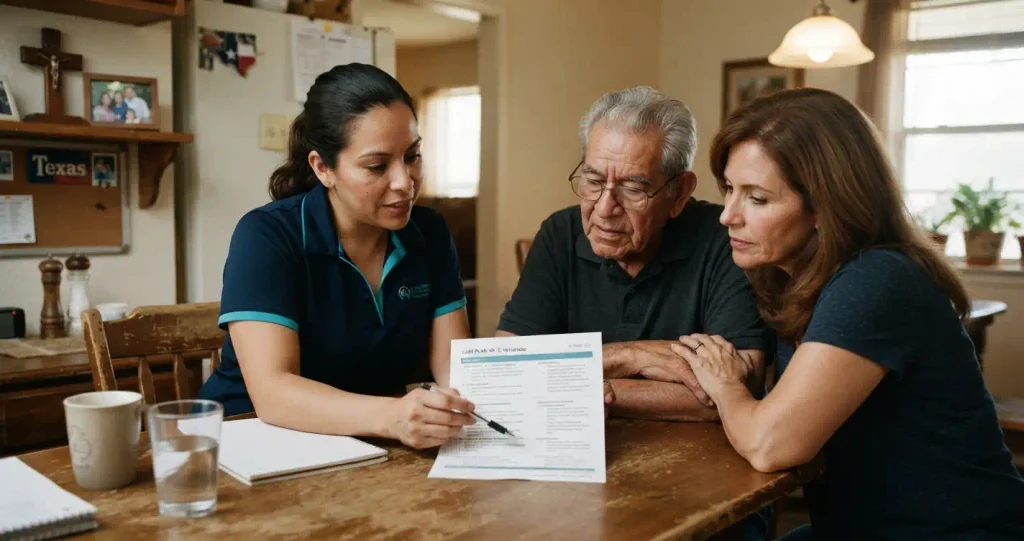
Before care begins, the agency must create a written plan of care. This plan spells out what services will be provided, how often, and by whom. Patients and families have the right to see this plan and ask questions about it.
Informed consent matters too. No treatment or service should happen without the patient, or their legal representative, agreeing to it first. If something changes in the care routine, the agency must explain why and get approval again.
If care falls short, patients do not have to stay silent. Texas allows families to file a formal complaint against any licensed home health agency. HHSC investigates these complaints and can take action if it finds violations.
To file one, you simply contact HHSC directly with details about the agency and the issue. Keep records of dates, conversations, and any concerns along the way. This documentation strengthens your complaint and makes it easier to investigate.
Paying for home health care often means dealing with Medicare or Medicaid. Both programs come with their own compliance rules, and agencies must follow them closely.
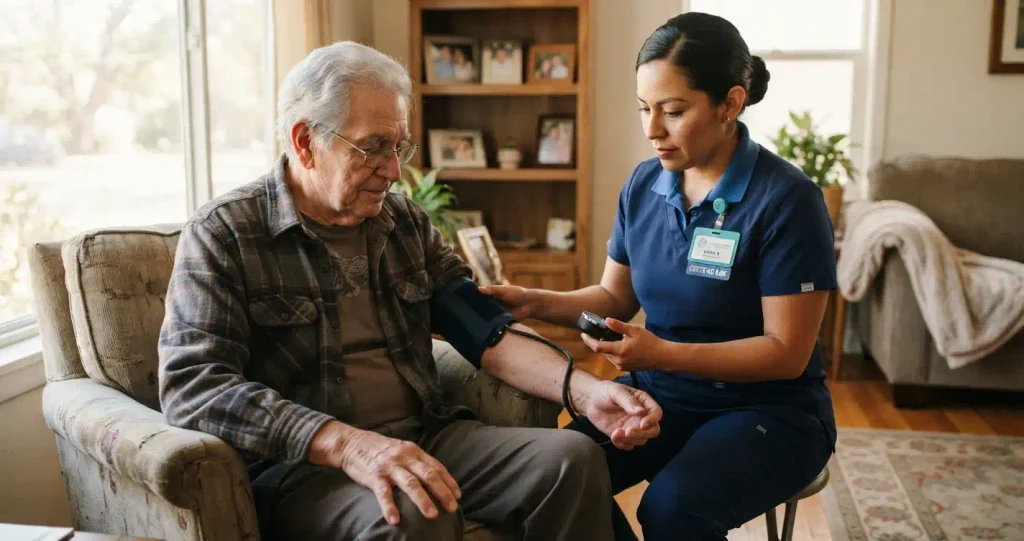
Medicare covers home health care only under specific conditions. The patient must be homebound, and a doctor must certify the need for skilled care. Without this certification, Medicare will not pay for services.
Medicaid works differently. In Texas, many patients access home care through STAR+PLUS, a managed care program for people who qualify for both Medicaid and long-term services. Coverage details depend on the patient’s specific plan and eligibility.
Families should always confirm coverage details before care begins. Misunderstanding these rules can lead to unexpected bills.
Compliance is not just about paperwork. Agencies that follow Medicare’s Conditions of Participation tend to deliver more consistent, higher-quality care. These federal standards cover everything from staff qualifications to how care is documented.
When an agency stays compliant, it usually means fewer gaps in service and better communication with families. Choosing a compliant agency protects both your loved one’s health and your finances.
After learning all these rules, one question remains. How do you actually find an agency that follows them? The good news is, you do not have to guess.
Start by asking direct questions.
Also ask about their care plan process. A trustworthy agency will explain how it creates and updates the plan. If an agency avoids these questions or gives vague answers, treat that as a red flag.
Families across Laredo, Zapata, San Antonio, and Corpus Christi deserve straight answers before letting anyone into their home.
Local agencies understand the specific needs of South Texas families. Champion Care inc operates as a fully licensed home health agency, following every HHSC requirement covered in this guide, from caregiver screening to documented care plans.
Choosing a compliant, local provider means peace of mind. It means knowing your loved one is cared for by trained, background-checked staff who follow the law, not just promises on a website.
Texas requires every home health agency to be licensed through HHSC. Agencies must background-check caregivers, follow a written plan of care for each patient, and have a registered nurse supervise skilled services. These rules apply statewide, including Laredo, San Antonio, Corpus Christi, and Zapata.
Yes. Any agency offering skilled nursing, therapy, or personal care services in a patient’s home must register as a Home and Community Support Services Agency (HCSSA) with HHSC. Operating without this license is illegal.
You can look up an agency’s license number through HHSC’s public database. It’s also a good idea to ask the agency directly for its license number and most recent inspection report before signing any service agreement.
Texas law requires a criminal history check for every caregiver. Agencies must also screen staff through the state’s employee misconduct registry, which flags anyone previously found guilty of abuse, neglect, or exploitation in a caregiving role.
Medicare covers home health care in Texas only when the patient is homebound, and a doctor certifies the need for skilled care. Without that certification, Medicare will not pay for the service, so families should confirm coverage details early.
You can file a complaint directly with HHSC by providing the agency’s name and details of the issue. Keeping records of dates, conversations, and concerns makes it easier for HHSC to investigate your complaint.
