Need help? Call Us: (956) 712-2156
1419 Market St. Laredo, TX 78041
Email : hello@championcareinc.com


As you get older, some everyday activities can become more difficult. Some seniors need help staying socially active, preparing meals, or running errands. Others need hands-on assistance with bathing, dressing, and personal hygiene.
Families often compare companion care vs. personal care for seniors when looking for the right in-home support. Although both services help older adults live more comfortably at home, they serve different needs.
Companion care focuses on social interaction and everyday support. Personal care provides physical assistance with daily activities that a senior may find difficult to manage alone. Understanding these differences can help families choose the right support for their loved ones. In this guide, we explain what each service includes, how they differ, and when a senior may benefit from both.
Companion care is a non-medical in-home service that helps seniors stay socially active, maintain daily routines, and enjoy their time at home.
Many older adults spend long periods alone. Family members may live far away or have work and other responsibilities. Over time, limited social interaction can affect a senior’s emotional well-being and daily routine.
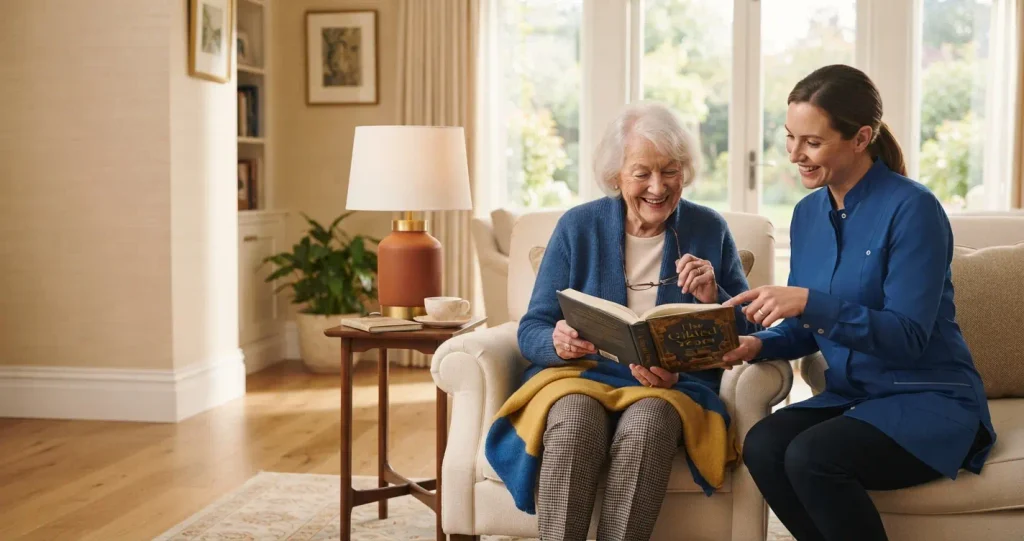
A companion caregiver provides regular company and practical help with everyday activities. The goal is to help seniors remain connected, comfortable, and independent. Companion care can be a good option for older adults who can manage most personal activities but would benefit from regular assistance and social interaction.
Companion care services can vary by provider and individual care plan. Common examples include:
Companion care is especially helpful for seniors who want to continue living at home but need regular company and support with everyday routines.

Personal care is a non-medical in-home service that provides hands-on assistance with daily activities. As people age, certain physical tasks can become harder. A senior may have difficulty bathing, getting dressed, using the bathroom, or moving safely around the home.
Personal care helps with these activities while respecting the person’s privacy, preferences, and independence. These services are often connected to Activities of Daily Living (ADLs). ADLs are basic self-care activities that people need to manage each day. Personal care may benefit seniors with mobility limitations, physical disabilities, or other age-related challenges that make daily self-care difficult.
Depending on the caregiver’s training, service plan, and applicable requirements, personal care may include:
Personal care does not replace skilled medical treatment. Caregivers assist with daily activities, while medical needs should be handled by qualified healthcare professionals.
The main difference between companion care and personal care is the type of assistance provided. Companion care focuses on social interaction, everyday activities, and emotional support. Personal care focuses on hands-on help with personal hygiene and daily self-care.
Here is a side-by-side comparison.
| Features | Companion Care | Personal Care |
| Main purpose | Social and everyday support | Hands-on daily assistance |
| Social interaction | Main focus | May be included |
| Conversation | Yes | Can be included |
| Meal preparation | May be included | May be included |
| Light housekeeping | Often included | Depends on care plan |
| Bathing assistance | Generally not included | Yes |
| Dressing assistance | Generally not included | Yes |
| Toileting assistance | Generally not included | Yes |
| Grooming | Non-hands-on support | Hands-on assistance |
| Mobility support | General accompaniment | Physical assistance when appropriate |
| Medication reminders | May be available | May be available |
| Main benefit | Companionship and independence | Support with personal care tasks |
Services vary by home care provider, caregiver qualifications, and individual care arrangements.
Companion care helps seniors stay involved in everyday life. A caregiver may prepare lunch, accompany them on a walk, help with shopping, or spend time talking.
Personal care focuses on activities that require physical assistance. For example, a caregiver may help a senior get dressed, bathe, or complete a bathroom routine. Both services can support aging in place, but the help they provide differs.
Companion caregivers generally provide non-hands-on assistance and social support. They may accompany seniors during everyday activities but do not usually provide bathing, dressing, or toileting assistance. Personal care caregivers provide hands-on support with approved daily activities. Their responsibilities depend on their training and the senior’s care plan.
Companion caregivers help maintain a senior’s daily routine and social connection. Their work may involve conversation, meal preparation, errands, and light housekeeping. Personal care caregivers focus more on personal hygiene, mobility, and other basic self-care activities. Neither type of non-medical caregiver should be confused with a licensed medical professional providing skilled nursing services.
A senior who can manage personal hygiene independently but needs regular company may benefit from companion care. Someone who struggles with bathing, dressing, or using the bathroom may need personal care. The right choice depends on what the individual can safely do and where assistance is needed.
Choosing between companion care and personal care starts with understanding your loved one’s daily routine. Rather than focusing only on age or general health, look at the specific activities they can manage independently and those where they need help.
Companion care may be appropriate when a senior can handle most personal activities but needs additional social and everyday support.
Some common signs include:
For example, an older adult may be able to bathe, dress, and move around independently but feel isolated because family members live in another city. A companion caregiver can visit regularly, prepare meals, help with errands, and spend time enjoying activities together. This type of support can help seniors maintain a more active daily routine.
Personal care may be a better option when a senior struggles with basic self-care activities.
Watch for signs such as:
For example, an older adult may enjoy spending time with family and friends but have difficulty getting dressed or bathing because of limited mobility. In this situation, companionship alone may not address the person’s needs. Personal care can provide the hands-on support required for everyday self-care. If a senior experiences new or sudden changes in mobility, balance, or daily functioning, families should also speak with a healthcare professional to understand the cause.
Yes. Some seniors benefit from both companion care and personal care. These services are not mutually exclusive. A senior may need help with personal hygiene while also benefiting from social interaction and assistance with everyday activities. For example, consider an older adult who needs help getting dressed and bathing but can still enjoy reading, conversation, and short outings.
A personalized care plan could include:
The combination depends on the senior’s needs, schedule, and available services. Care needs can also change over time. Someone who initially needs only companion care may later benefit from personal care if daily self-care becomes more difficult. Families should review the care plan regularly and discuss any changes with the home care provider.
Families sometimes confuse companion care, personal care, and home health care. Although all three can support older adults at home, they have different purposes.
For example, a senior who needs company and help with shopping may benefit from companion care. Someone who needs help bathing may need personal care. A person who requires skilled wound care or prescribed physical therapy may need home health services.
The right service depends on the person’s needs. In some situations, families may arrange more than one type of support.
Choosing a home care provider is an important decision. Families should look beyond the service name and understand how the agency supports seniors.
Here are some factors to consider before deciding.
Do not assume that Medicare or another insurance plan covers every type of in-home care. Coverage depends on the service and applicable eligibility requirements.
Before choosing a home care agency, consider asking these questions:
The answers can help families understand what to expect and whether the provider is a good fit.
Finding reliable in-home support can make daily life easier for seniors and their families.
Champion Care Inc. has more than 30 years of experience supporting individuals and families through home care services. The organization serves communities across South Texas, including Laredo, Zapata, Corpus Christi, and San Antonio.
Its services include caregiver support, personal care, companionship, respite care, and other home-based assistance based on individual needs and service availability.
Champion Care also offers bilingual support to help families communicate more comfortably about their loved one’s care.
Whether your family is considering companion care, personal care, or additional caregiver assistance, the first step is understanding what kind of support your loved one needs.
Contact Champion Care Inc. to discuss your family’s needs and learn more about available in-home care services.
Companion care focuses on social interaction and everyday support, such as conversation, meal preparation, and errands. Personal care provides hands-on assistance with daily activities such as bathing, dressing, grooming, and toileting.
Generally, no. Companion care focuses on non-hands-on support and social interaction. Seniors who need physical assistance with bathing, dressing, or personal hygiene may benefit from personal care services.
Yes. Some seniors need help with personal hygiene while also benefiting from companionship and everyday assistance. A personalized care plan can combine both services based on individual needs and provider availability.
Original Medicare generally does not cover standalone companion care or personal care. However, certain home health aide services may be covered when provided as part of eligible, qualifying home health care under Medicare rules. Families should check current coverage requirements.
Your parent may need personal care if they regularly struggle with bathing, dressing, grooming, toileting, or other daily self-care activities. Discuss these difficulties with a healthcare professional and a qualified home care provider to understand the appropriate support options.
