
Medication management for the elderly is more than just taking pills. It means keeping track of all prescriptions. It means knowing the correct dose and making sure medicines work well together. As people get older, their bodies handle drugs differently. This makes careful management very important.

Seniors often face problems like forgetfulness, having many prescriptions, or trouble reading labels. These can lead to missed doses or side effects. Managing medicines at home with the help of caregivers or home care services can keep seniors healthier. It can lower hospital visits and give families peace of mind. Proper care helps seniors stay safe and independent every day.
What Is Medication Management for the Elderly?
Medication management for the elderly goes beyond simply taking medicine at the right time. It is a way to ensure seniors take the right pills, in the right amounts, and at the correct times. As people age, their bodies process medicine differently. What worked before might not work the same way now. Poor management can cause side effects or reduce the medicine’s effectiveness. Good medication management helps seniors stay healthy, safe, and independent. It also makes life easier for family caregivers and professional caregivers who help with daily care.
Why Medicine Becomes Harder With Age
As people get older, their memory, vision, and hearing may change. Forgetting doses or reading labels wrong is common. Seniors often have more than one health condition. This means they take several prescriptions at once, which can get confusing. The body also reacts differently to drugs, making timing and dosage very important. Even simple medicine mistakes can lead to serious health problems. That is why older adults need a clear system to manage their medicines at home.
Difference Between Taking Medicine and Managing Medicine
Taking medicine is simple, swallowing a pill or applying a cream. Managing medicine is a bigger task. It involves keeping a complete list of prescriptions, tracking doses, noting side effects, and coordinating with doctors and pharmacies. Management also includes organizing pill boxes, setting reminders, and checking for medicine interactions. It is about safety, not just routine. Good management helps seniors avoid hospital visits and maintain their health.
Real-Life Example
Imagine a senior forgetting a morning pill or taking the same medicine twice by mistake. This can make them dizzy or cause stomach problems. Or think about a person with five prescriptions from different doctors. Without a clear plan, it is easy to mix them up. A well-organized system helps prevent these problems. Family caregivers or professional home care agencies can set up reminders, track doses, and make sure every pill is taken safely.
Why Medication Management Is So Important for Seniors
Medication management is crucial for seniors, as their bodies change with age. Older adults may process drugs more slowly or faster, which can affect how medicines work. Even common prescriptions can cause side effects if taken incorrectly. Careful management helps prevent problems like dizziness, stomach issues, or dangerous interactions between drugs.
Properly managing medications also protects a senior’s independence. When medicine schedules are confusing, it’s easy to miss doses or take the wrong amount. This can lead to fatigue, falls, or other health setbacks. With proper systems in place, seniors can stay in their homes safely and handle daily tasks without constant help.

Families often feel stressed when a loved one struggles with medicine. Seeing missed doses or sudden health changes can be worrying. Medication management reduces this stress by keeping everything organized and predictable. It also gives peace of mind knowing someone is monitoring side effects and refill schedules.
Poor medication management can lead to hospital visits. Even a small mistake, like doubling a dose, can require urgent care. Coordinating prescriptions with doctors, pharmacies, and caregivers ensures each medicine works as intended. Seniors with multiple prescriptions benefit the most from a clear plan, reminders, and regular review.
Good management also improves quality of life. Seniors feel safer and more confident when they know their medicines are tracked. Family members and caregivers can focus on support rather than constant oversight. Professional help, like home care services, adds an extra layer of safety and accountability.
Proper medication care is not just about health; it affects daily life, emotional well-being, and long-term safety. Using tools, reminders, and professional guidance helps seniors live independently while reducing risks and stress for everyone involved.
Common Medication Challenges Faced by the Elderly
Many seniors face real challenges when taking medicines safely. These challenges can make even simple prescriptions hard to manage. Understanding them helps families and caregivers create better systems at home.
Memory Loss and Forgetfulness
Memory issues are common in older adults. A senior may forget to take a pill in the morning or evening. Sometimes, they might take the same medicine twice by mistake. Forgetfulness can cause serious side effects or reduce the medicine’s effectiveness. Using reminders or caregiver check-ins can help prevent missed doses.
Multiple Prescriptions (Polypharmacy)
Many seniors see more than one doctor. Each may prescribe different medicines for various health conditions. This can lead to conflicting medications or confusing schedules. Polypharmacy increases the risk of side effects and drug interactions. Keeping an updated list of all prescriptions is essential for safety.
Vision and Hearing Problems
Reading small labels or hearing instructions can be difficult for older adults. Misreading a dosage or misunderstanding directions can be risky. Clear labeling, large-print instructions, and speaking instructions slowly can reduce mistakes.
Physical Limitations
Some seniors struggle with opening pill bottles or swallowing pills. Arthritis, hand weakness, or dental issues can make medicine management challenging. Simple tools like easy-open bottles, pill organizers, or liquid alternatives can make a big difference.
These challenges show why medication management for the elderly is more than just giving pills. It requires planning, monitoring, and support from family, caregivers, or home care services. Addressing memory, multiple prescriptions, vision, hearing, and physical limits helps seniors stay safe and independent.
Signs an Elderly Person Needs Help With Medication
Seniors sometimes struggle to manage their medications independently. Memory lapses, multiple prescriptions, and confusion about timing or dosage can make daily medicine routines challenging. Watching for early warning signs helps families step in before mistakes or health problems occur. Key signs include:
- Missed or mixed-up doses: Forgetting pills or taking the same one twice.
- Unopened prescriptions: Pills left in bottles or not refilled on time.
- Sudden health changes: New symptoms like dizziness, fatigue, or nausea.
- Confusion about names or timing: Difficulty remembering which medicine to take and when.
- Repeated questions about medicine: Asking the same thing multiple times shows memory struggles.
Family members and caregivers often spot these early warning signs first. When these issues appear, extra support from caregivers or senior home care services can improve safety and health.
Recognizing these signs early can:
- Reduce side effects
- Prevent hospital visits
- Help seniors maintain independence.
Giving proper attention to medication routines ensures seniors take every dose correctly, prevents medication errors and side effects, keeps them safe and independent, and provides families with lasting peace of mind and confidence.
What Does Proper Medication Management Include?
Proper medication management for the elderly is about more than taking pills. It involves organizing, monitoring, and communicating to keep seniors safe and healthy. Good management helps avoid mistakes, side effects, and missed doses. It also ensures medicines work effectively for each condition.
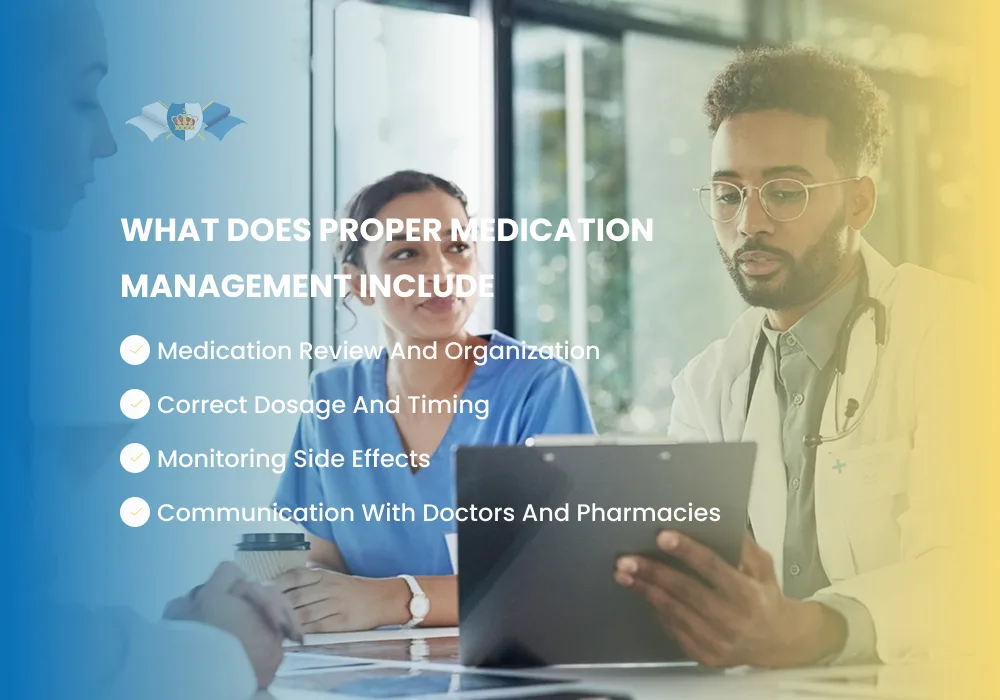
Medication Review and Organization
- List all prescriptions: Keep track of every medicine a senior takes.
- Remove outdated or expired medicines: Old pills can cause confusion or harm.
- Organize by time and day: Use pill boxes or dispensers for clarity.
Correct Dosage and Timing
- Follow daily schedules: Take medicine at the right time, every day.
- Food and timing rules: Some medicines need to be taken with meals, while others require taking them on an empty stomach.
- Double-check instructions: Ensure seniors understand when and how to take each medicine.
Monitoring Side Effects
- Track reactions: Watch for dizziness, fatigue, nausea, or other changes.
- Report changes promptly: Communicate with doctors or pharmacists about any new symptoms.
- Adjust as needed: Work with healthcare providers to ensure medicines remain safe and effective.
Communication With Doctors and Pharmacies
- Update medication lists: Share all prescriptions with every healthcare provider.
- Coordinate refills: Ensure medicines never run out.
- Ask questions: Clarify instructions, side effects, and interactions whenever needed.
Proper medication management creates a clear plan for every medicine. It keeps seniors safe, prevents mistakes, and improves overall health. With the right system, family members, caregivers, and professionals can work together to make daily medicine routines reliable and straightforward.
Who Can Help With Medication Management for the Elderly?
Managing medicines at home can be challenging. Seniors often need support to stay safe and healthy. Several people and services can help, each with their own strengths.
Family Caregivers
Family members play a vital role in daily medicine routines.
- Help organize prescriptions and pill boxes.
- Remind seniors about doses and schedules.
- Monitor for side effects and missed doses.
Limitations: Families may not always be available, and memory or work schedules can affect consistency.
Professional Caregivers
Trained caregivers can provide regular, hands-on support.
- Ensure daily doses are taken correctly.
- Track side effects and communicate with doctors.
- Provide reliable oversight for seniors with multiple prescriptions
Professional caregivers are skilled and consistent, making them a strong option for seniors needing extra help. To learn more about the cost of hiring a caregiver and what services are included, visit Champion Care Inc.’s caregiver cost guide.
Home Care Agencies
Home care agencies offer structured systems for medication management.
- Combine professional caregivers and a clear schedule.s
- Monitor medicine adherence closely.
- Provide accountability and safety for families.
These services reduce stress for both seniors and family members. Seniors remain independent while staying safe. Agencies like Champion Care Inc. specialize in gentle, trustworthy support for seniors, helping them manage medications effectively without feeling overwhelmed. Contact Champion Care Inc. today to learn how their trained caregivers can create a safe, simple medication routine for your loved one.
Tools and Systems That Help Seniors Manage Medication
Many seniors benefit from simple tools and systems to keep their medicines organized and safe. These solutions help prevent missed doses, mistakes, and side effects. Caregivers and home care services can set up these tools to make daily routines easier.
Pill Organizers and Dispensers
- Weekly and monthly pill boxes: Sort medicines by day and time
- Automatic dispensers: Release pills at scheduled times
- Easy-to-use designs: Help seniors with arthritis or weak hands
These tools make it easier for seniors to remember doses and reduce confusion with multiple prescriptions.
Medication Reminders
- Phone alerts: Set alarms for each dose
- Caregiver check-ins: Reminders from family or professional caregivers
- Visual cues: Stickers or charts to track daily intake
Reminders help seniors stay on schedule, avoid missed doses, and manage their medicines safely.
Medication Lists and Logs
- Complete medication list: Include every prescription, over-the-counter drug, and supplement
- Track changes and side effects: Note reactions to discuss with doctors
- Use for emergencies and doctor visits: Keep a copy handy for healthcare providers.
Keeping clear logs ensures caregivers and healthcare professionals have accurate information. It also prevents mistakes and improves overall medication safety.
Using these tools and systems creates a reliable routine. Seniors stay independent, reduce stress, and feel confident taking their medicines correctly. Caregivers and home care services benefit too, with a clear system that keeps everyone informed and safe.
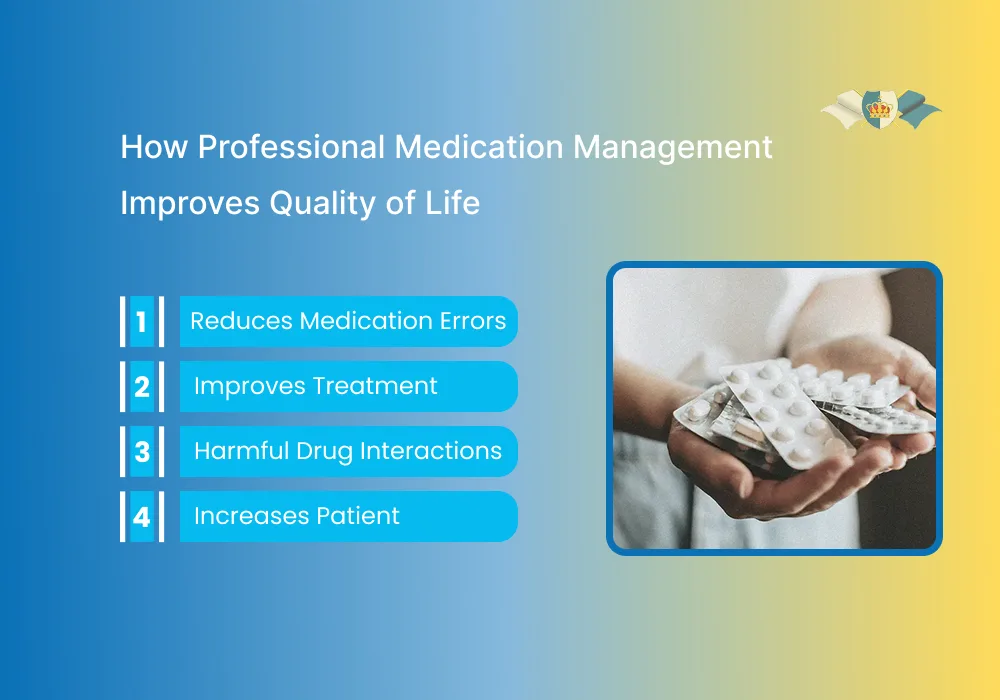
How Professional Medication Management Improves Quality of Life
Proper medication management by trained professionals can make a big difference for seniors. It keeps medicines organized, prevents mistakes, and reduces the risk of side effects. Seniors feel safer and more confident when someone knowledgeable helps them manage their prescriptions. Families also gain peace of mind knowing their loved one is supported every day.
Better Health Outcomes
With professional support, seniors take the right medicines at the right time. Side effects are monitored closely, and any concerns are reported to doctors. This reduces the chance of health complications and hospital visits. Seniors stay healthier and more independent when medications are managed carefully.
Reduced Stress for Seniors and Families
Managing multiple prescriptions can be overwhelming. Professional caregivers provide consistent support, making daily routines more predictable and easier to follow. Seniors feel confident, and families feel relieved. Stress decreases, and everyone can focus on enjoying daily life instead of worrying about missed doses or mistakes.
Choosing the Right Medication Management Support
Finding the proper support for medication management is essential for seniors and families. The goal is safety, accuracy, and peace of mind. The right caregiver or agency makes daily medicine routines easier and helps prevent mistakes.
What to Look for in a Caregiver or Agency
When selecting support, consider experience and reliability. A caregiver should understand seniors’ needs and follow instructions carefully. Home care agencies should have structured systems for tracking medications. Communication is key. They should coordinate with doctors, pharmacists, and family members to avoid errors and ensure all prescriptions are correct.
Training, Experience, and Safety Standards
Professional caregivers should have proper training in medication management. They should know how to handle side effects, measure doses, and recognize warning signs. Agencies must follow safety and compliance standards. A good support team reduces hospital visits, lowers stress, and helps seniors stay independent.
Choosing the proper medication management support is more than hiring help. It is about creating a safe, reliable routine. Seniors can take their medicines confidently, and families can feel secure knowing someone trained is overseeing daily care.
Medication Management Services at Champion Care Inc.
At Champion Care Inc., seniors receive reliable and caring support with their medications. Our team helps organize prescriptions, track doses, and monitor side effects. We focus on safety, independence, and dignity for every senior.
Our caregivers work closely with families and healthcare providers to make sure every medicine is taken correctly. Seniors benefit from clear schedules, reminders, and regular check-ins. This reduces mistakes, prevents hospital visits, and helps seniors feel confident in their daily routines.
Champion Care Inc. is ideal for seniors with multiple prescriptions, memory challenges, or complex health needs. Our services give families peace of mind, knowing that a trained professional is managing daily medication care.
Seniors stay healthier and more independent with our support. Families can relax, knowing medicine management is handled safely and respectfully.
To learn more or schedule a free consultation, reach out to Champion Care Inc. today. Our team is ready to help you create a safe and simple medication routine.
Final Thoughts on Medication Management for the Elderly
Medication management for the elderly is essential for safety, health, and independence. Seniors face challenges like memory lapses, multiple prescriptions, and physical limitations. Without proper support, mistakes can lead to side effects, confusion, or hospital visits.
A clear system with organized prescriptions, reminders, and professional oversight keeps seniors safe. Family caregivers, skilled caregivers, and home care services all play essential roles. Using tools such as pill organizers, medication logs, and alerts helps seniors confidently follow their schedules.
Proper medication management also reduces stress for families. Seniors can maintain independence while knowing someone is watching over their health. By taking medication management seriously, families can protect loved ones, improve daily routines, and ensure long-term safety.
Champion Care Inc. offers trusted support for seniors, making medication routines simple, safe, and reliable.
Frequently Asked Questions (FAQs)
What is medication management for elderly patients?
Medication management for the elderly means ensuring seniors take the right medicines at the correct times. It includes tracking prescriptions, monitoring side effects, and coordinating with doctors and caregivers. Proper management keeps seniors safe, healthy, and independent.
Can caregivers administer medication at home?
Yes. Trained caregivers can help seniors take their medicines correctly. They can organize pills, give reminders, and monitor for side effects. Caregivers provide daily support, especially for seniors with multiple prescriptions or memory challenges.
How many medications are too many for seniors?
There is no strict number, but taking multiple prescriptions can increase the risks of side effects and interactions. Seniors with several medicines benefit from clear schedules, logs, and professional oversight. Regular reviews with doctors help keep medicine safe.
What happens if a senior misses a dose?
Missing a dose can reduce the medicine’s effectiveness and sometimes cause side effects. Even small mistakes may lead to health problems or hospital visits. Using reminders, pill organizers, and caregiver support helps prevent missed doses.
Is professional medication management worth it?
Absolutely. Professional support ensures doses are correct, side effects are monitored, and prescriptions are organized. Seniors feel safer and more confident. Families experience less stress. Overall, it improves health outcomes, safety, and daily independence.