Need help? Call Us: (956) 712-2156
1419 Market St. Laredo, TX 78041
Email : hello@championcareinc.com

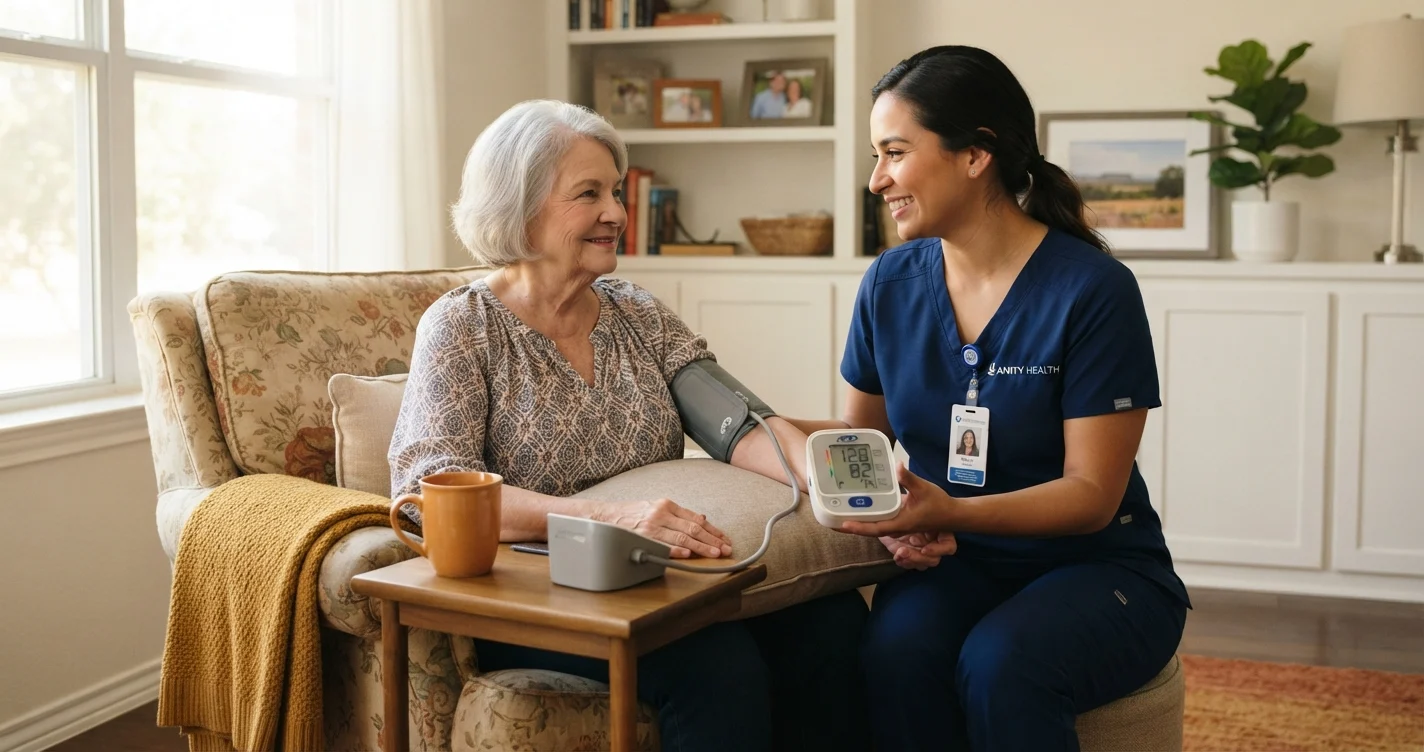
One phone call from the hospital. That’s often when families first hear the words “home health care” and realize they have no idea what it actually means.
Understanding the types of home health care services available can feel overwhelming when a loved one needs help right after a hospital stay. In simple terms, home health care brings skilled nursing, physical therapy, and personal care assistance straight to your living room in Texas.
A doctor orders the care, and a licensed team handles everything from wound care to medication management. Whether your family is managing diabetes, recovering from surgery, or just trying to keep an aging parent safe at home, knowing your options makes the whole process less stressful and a lot more manageable.
Home health care brings medical and support services directly to your home. A doctor orders the care. A licensed team delivers it. This includes nurses, therapists, and aides who help patients recover, manage chronic conditions, or stay independent at home.
In Texas, home health care is common after a hospital stay, a surgery, or a new diagnosis. It also helps older adults who want to age in place instead of moving into a facility.
These two terms sound alike, but they are not the same.
Home health care is medical. A doctor must order it. Services include skilled nursing, physical therapy, and wound care. Medicare often covers it when specific requirements are met.
Home care is non-medical. It covers help with daily tasks like bathing, meal prep, and companionship. Families often pay for this out of pocket.
Many patients use both types together. A nurse may visit twice a week for medical care, while a home care aide helps with daily routines the rest of the time.
Some signs are easy to miss until a crisis happens. Watch for:
• Frequent falls or trouble with balance
• Missed medications or confusion about dosages
• A recent hospital stay or surgery
• Unmanaged symptoms from a chronic illness
• Increasing difficulty with daily tasks like cooking or bathing
If you notice these signs in a parent or loved one, it may be time to talk to their doctor about a home health referral.
A nurse showing up at your front door. For many Texas families, that’s the moment recovery starts to feel possible again.
Skilled nursing care means a registered nurse or licensed vocational nurse visits your home to handle medical tasks a doctor has ordered. This can include wound care, injections, and monitoring for chronic conditions like diabetes or heart failure. It’s real medical care, just delivered where you’re most comfortable.
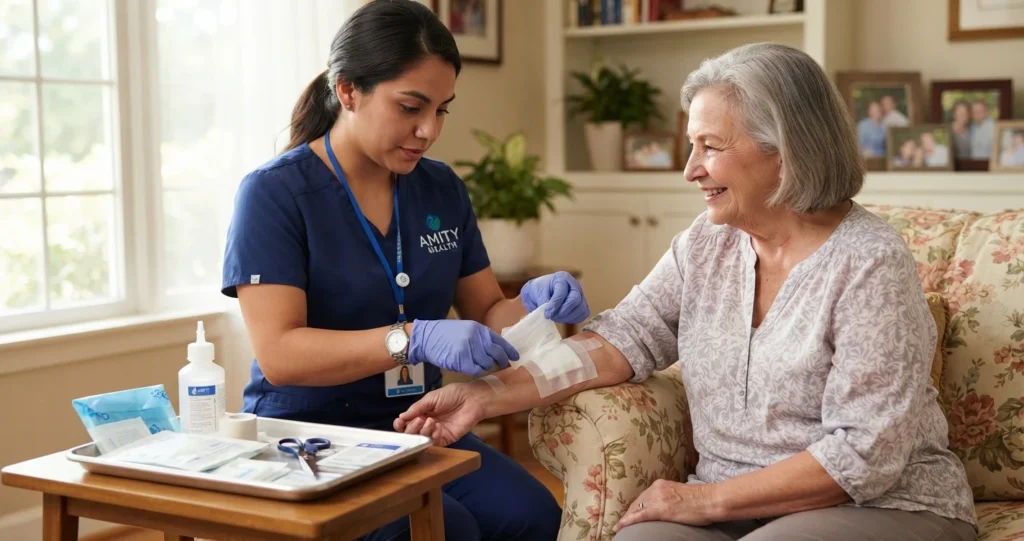
Healing after surgery takes more than rest. It takes the right care.
A nurse checks incisions for infection. She changes dressings the correct way. She watches for early warning signs a family might miss. This kind of post-surgical support often makes the difference between a smooth recovery and a trip back to the hospital.
Managing medications sounds simple until you have ten different pills on ten different schedules.
A skilled nurse sorts this out. She gives injections, like insulin, safely. She checks for drug interactions. She makes sure you’re taking the right dose at the right time, every time.
Chronic conditions don’t take days off, and neither does the care.
Nurses track blood sugar levels for diabetes. They listen to lungs for signs of COPD flare-ups. They check weight and swelling for heart failure patients, since sudden changes can signal trouble early. This steady, hands-on monitoring helps catch problems before they become emergencies.
Learning to walk again after a stroke. Relearning how to swallow safely. Therapy at home makes moments like these possible without a single trip to a clinic.
Home-based therapy brings licensed therapists to your door to help you regain strength, movement, and daily function. This includes physical therapy, occupational therapy, and speech-language pathology. Each one focuses on a different part of recovery, but together they help patients rebuild independence.
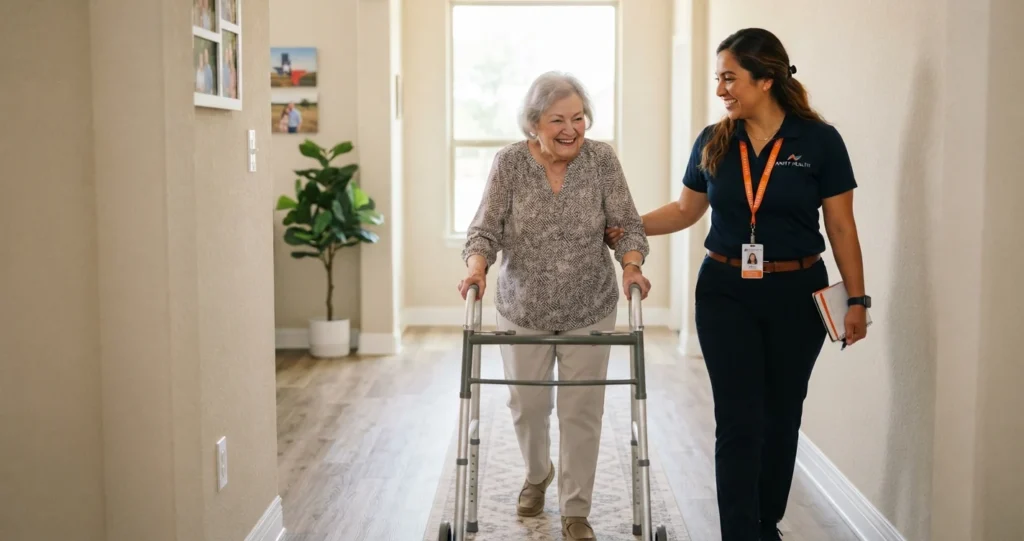
Getting back on your feet takes practice, and practice works best at home.
A physical therapist helps with balance, strength, and mobility. She builds a plan around your specific needs, whether that’s walking safely again after a fall or building strength after surgery. Fall prevention is often a big part of this work, especially for older adults in Texas living alone.
Getting dressed. Cooking a meal. Taking a shower safely. These are the activities of daily living, and they matter more than people realize.
An occupational therapist helps patients relearn these tasks or find easier ways to do them. She may recommend simple home modifications, like grab bars or raised toilet seats, to reduce fall risk and support aging in place.
A stroke can affect more than movement. It can affect speech and swallowing too.
A speech-language pathologist helps patients recover clear communication. She also treats swallowing problems, which can be dangerous if left untreated. This care often makes eating and talking safer and easier again.
Not all care is medical. Sometimes what a family needs most is a helping hand and a friendly face.
Personal care services support daily living without requiring a nurse or therapist. A home health aide or certified nursing assistant helps with basic tasks people may struggle with due to age, illness, or recovery. This kind of support keeps patients safe, clean, and comfortable at home.
Simple tasks can become hard tasks after an illness or surgery.
A trained aide helps with bathing, dressing, and grooming safely. She watches for fall risks in the bathroom, one of the most common places accidents happen. This support protects both safety and dignity, letting patients keep their routines without the danger.
Recovery isn’t just physical. Isolation can slow healing and hurt mental health, especially for older adults living alone.
A caregiver offers companionship along with hands-on help. She talks, listens, and checks in regularly. For many families, this emotional support matters just as much as the physical care, since it reduces loneliness and gives peace of mind to relatives who can’t be there every day.
Technology is changing what home health care looks like, especially here in Texas. Some of the most helpful tools now live right on a nightstand.
Specialized programs go beyond basic nursing and therapy. They use monitoring technology and Medicare-backed benefits to catch problems early and make care more affordable. These programs are especially useful for patients managing chronic conditions across South Texas communities like Laredo, Zapata, San Antonio, and Corpus Christi.
A small device on a nightstand can catch a heart problem before it becomes an emergency.
Telemonitoring uses simple equipment at home to track vital signs like blood pressure, oxygen levels, and weight. A nurse reviews the numbers remotely. If something looks off, she calls the patient or the doctor right away. This kind of remote patient monitoring helps prevent hospital readmissions, especially for conditions like heart failure and COPD.
Cost stops many families from asking for help. Medicare often removes that barrier.
When a doctor certifies that a patient is homebound and needs skilled care, Medicare’s home health benefit can cover nursing visits, therapy, and aide services. Coverage rules depend on the plan of care the physician sets. Checking eligibility early makes the process smoother when care is needed fast.
The right home health agency can make recovery feel calm instead of chaotic. The wrong one can add stress at the worst possible time.
Choosing a home health care provider means looking past a website and checking real credentials, experience, and local presence. Not every agency offers the same level of care, so a little research upfront saves a lot of trouble later.
A few good questions can reveal a lot about an agency before you sign anything.
Ask if the agency is Medicare-certified. Ask who creates the plan of care and how often a nurse checks in. Ask about staff credentials, like whether care comes from a registered nurse, licensed vocational nurse, or certified nursing assistant. A trustworthy agency answers these questions clearly, without hesitation.
A provider that knows South Texas knows more than just the roads.
A local agency like Champion Care Inc. understands the specific needs of communities across Laredo, Zapata, San Antonio, and Corpus Christi. That means faster response times, familiarity with local physicians, and a team that treats patients like neighbors, not case numbers. When it comes to home health care, local trust matters as much as clinical skill.
Choosing the right home health care isn’t just about medical tasks. It’s about safety, comfort, and peace of mind for your whole family.
From skilled nursing and therapy to personal care and telemonitoring, Texas families have more options than ever. The key is matching the right service to your loved one’s actual needs and working with a provider who understands your community.
If you’re ready to explore home health care options in South Texas, Champion Care Inc. is here to help. Our team serves families across Laredo, Zapata, San Antonio, and Corpus Christi with compassionate, Medicare-certified care built around each patient’s plan of care.
Call us today at (956) 712-2156 to schedule a free consultation and find the right home health care plan for your loved one.
Home health care is medical and requires a doctor’s order. It includes services like nursing and therapy. Home care is non-medical support with daily tasks, like bathing or meal prep, and doesn’t require a physician referral.
Medicare can cover home health services when a doctor certifies that a patient is homebound and needs skilled care. Coverage depends on the plan of care and eligibility requirements set by Medicare.
Registered nurses (RNs) and licensed vocational nurses (LVNs) typically provide skilled nursing care at home, including wound care, medication management, and chronic disease monitoring.
Common signs include frequent falls, missed medications, a recent hospital stay, or growing difficulty with daily tasks like cooking or bathing. A conversation with their doctor is a good first step.
Champion Care Inc. provides home health services across South Texas, including Laredo, Zapata, San Antonio, and Corpus Christi.
