Need help? Call Us: (956) 712-2156
1419 Market St. Laredo, TX 78041
Email : hello@championcareinc.com

A home care assistant is crucial in helping seniors and individuals with disabilities live well at home. In today’s world, an increasing number of people are opting for home care services to maintain their safety and independence. These assistants assist with daily activities, such as bathing, dressing, and eating. They also offer companionship and help keep the home secure. As our society ages, home care becomes increasingly critical.
In this post, we’ll explore the primary duties of a home care assistant, the skills required, and how they support seniors in maintaining their health. We’ll also cover the differences between home care assistants and caregivers. It will help you understand what to expect from a home assistant or how to become one. It will demonstrate how their role extends beyond just daily tasks; they provide emotional support and make a genuine difference in the lives of those they assist.
A Home Care Assistant helps individuals with daily activities at home. Duties include assisting with personal care, meal preparation, medication reminders, light housekeeping, and companionship. They support clients’ physical and emotional well-being, ensuring safety, comfort, and independence while following care plans and reporting any changes to healthcare professionals.
Home care assistants primarily work with older adults or individuals who are unable to perform specific tasks independently. They help with simple daily activities that can be difficult for these individuals. This can be as basic as helping with meals or providing companionship. The goal is to help them maintain their health and safety while living in their own homes.
Home care assistants work in different places. Most of them work in private homes, helping people stay independent. They may also work with home care agencies or in assisted living communities. No matter where they are, their focus is always the same: offering care and comfort to those in need.
Home care services are key for seniors and people with disabilities. Many prefer to stay in their own homes, where they feel comfortable and safe. A home care assistant makes this possible. They help people live the best life possible in their own homes, keeping them healthy and happy.
Home care aides provide much more than just physical help. They offer emotional support, which helps alleviate loneliness and enhance overall well-being. Their work is essential, and it makes a real difference in the lives of the people they care for.
A home care provider has several vital duties that help people live well at home. These tasks are essential for ensuring safety, comfort, and independence.
One primary duty is helping with personal care. This involves assisting with activities such as bathing, dressing, and grooming. For many, these tasks become difficult. A home care aide ensures they can still maintain their hygiene and dignity.
Another key task is meal preparation. Home care providers help prepare healthy meals and assist with feeding as needed, ensuring the person receives adequate nutrition to stay healthy.
Home care aides help people remember to take their medications. While they don’t give the medicine, they remind the person when it’s time. This is crucial for managing health and adhering to treatment plans.
Another big part of the job is assisting with mobility. A home care assistant helps with walking, moving between rooms, and getting in or out of bed. This support helps keep the person safe and reduces the risk of falls.
The most crucial duty is providing companionship. Many people who need care often feel lonely. A home care assistant can offer emotional support through conversation, playing games, or simply being present. This emotional connection helps improve their mental well-being.
These key duties are essential for a home care assistant. They improve a person’s quality of life by providing both physical assistance and emotional support.
A home care attendant and a home care assistant share many responsibilities. The title “attendant” is commonly used in Medicaid programs, state agency contracts, and veteran care plans. In Texas, Community Attendant Services (CAS) under Medicaid uses this term specifically to refer to caregivers who support daily living tasks at home.
The duties of a home care attendant typically include:
Champion Care attendants in Laredo and South Texas are trained, background-checked, and matched to each client based on language preference, schedule, and level of care needed. Our team communicates fluently in both English and Spanish.
If you’d like to learn more about the full scope of caregiver support for older adults, explore our guide on caregiver duties and responsibilities for the elderly. It covers additional day-to-day care tasks and how professional caregivers help seniors maintain comfort, safety, and independence at home.
A home care aide provides non-medical support to seniors, adults recovering from illness or surgery, and individuals living with physical or cognitive disabilities. The role sits between a companion caregiver and a skilled home health professional.
Home care aide duties include all personal care and homemaker tasks, with added focus on:
Home care aides do not perform clinical procedures. They do not change sterile wound dressings, administer injections, adjust medications, or operate complex medical equipment. Those tasks require a licensed nurse or therapist. If your loved one needs that level of care, Champion Care offers skilled home health services alongside personal care support.
Wondering exactly where the boundary is? See our full guide on what tasks home health aides are not allowed to do to understand the legal and professional limits of non-medical home care in Texas.
A home care aide plays a significant role in elderly care. Their role extends beyond daily tasks. They also ensure the well-being of older people by monitoring their health and promoting safety. Let’s take a closer look at the core responsibilities in elderly care.
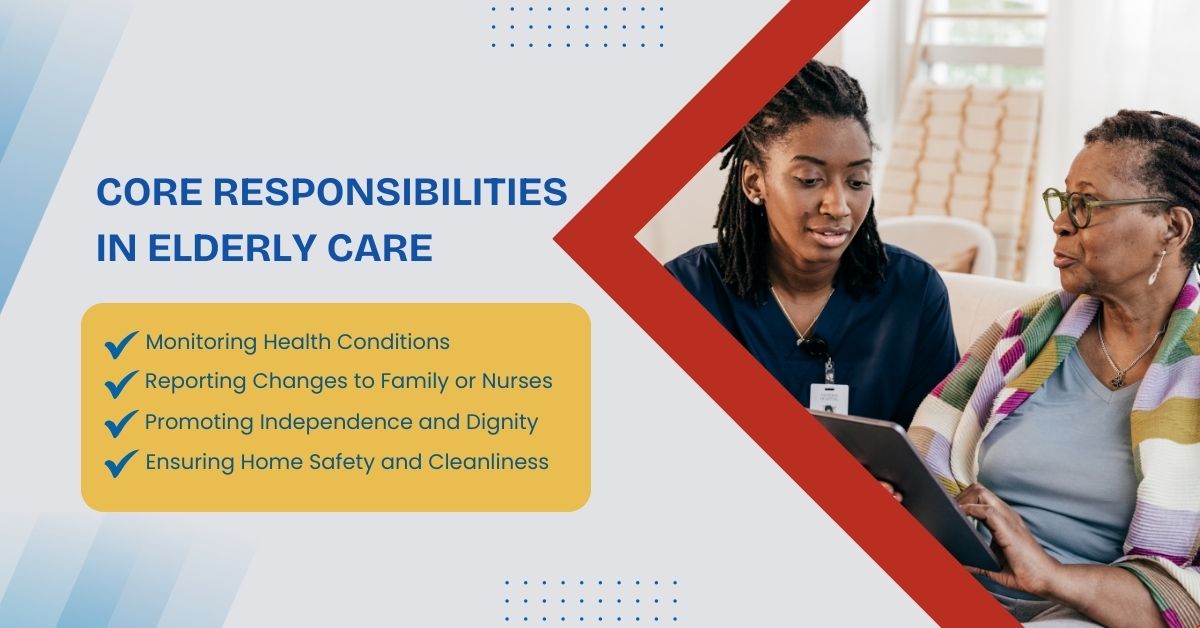
One of the most critical tasks is monitoring health conditions. A home care assistant monitors a person’s health, such as by checking vital signs or noticing changes in behavior. This helps ensure that any issues are identified and addressed promptly.
If a home care provider notices changes in a person’s health, they should report them to the family or a nurse. This could include changes in eating habits, mood, or mobility. Timely communication is crucial to ensuring that the person receives the care they need.
A home care provider helps seniors maintain their independence and autonomy. They assist as needed and encourage the person to take action on their own, helping them feel empowered and respected. Promoting independence does not mean maintaining dignity and doing everything for the person.
Home safety is another vital responsibility. A home care assistant ensures that the person’s living environment is free of hazards. This may include removing obstacles, ensuring the home is well-lit, or assisting with basic cleaning tasks. A safe and clean house is essential for preventing accidents and promoting overall well-being.
These core responsibilities extend beyond helping with daily activities. A home caretaker guarantees that seniors feel safe, respected, and well cared for. Their work helps seniors maintain their health, independence, and dignity in their own homes.
It’s essential to understand the difference between a home health care assistant and a caregiver. While both roles help those in need, their tasks, training, and responsibilities can vary. Here’s a breakdown of the key differences:
These differences highlight how the roles of home health care assistants and caregivers complement each other, providing a broad range of support to those in need.
Whether you are a family hiring a home care assistant for a loved one, or an individual exploring a career in home care, understanding the full job description helps set clear expectations from the start.
Home care assistant, home care aide, home care attendant, personal care aide, home care worker, in-home caregiver, home health aide (non-medical), companion caregiver. These titles vary by agency, state program, and setting but describe similar roles.
At Champion Care Inc, all home care assistants complete a thorough screening and training process before being placed with a client. We verify credentials, conduct criminal background checks, and match caregivers to each family based on experience, schedule, and language preference.
Looking to hire a home care assistant in Laredo or South Texas? Call Champion Care at (956) 712-2156 for a free assessment. We will match your loved one with the right caregiver.
Certain qualities are essential to being a great home care assistant. These qualities help ensure that the person receiving care feels respected, safe, and well supported. Here are the key traits that make a home care aide:
These qualities make a home care assistant not just effective, but someone who can genuinely improve the quality of life for those they care for.
Another vital aspect of a home care assistant’s role is providing family support and coordinating care. They communicate with family members to update them on the senior’s well-being. They may also coordinate with medical professionals or other caregivers to ensure the person’s care plan is being followed. This helps keep everyone on the same page and ensures the senior receives the best possible care.
By providing these additional forms of support, home care aides significantly impact seniors’ overall quality of life. They help create a nurturing environment that allows seniors to thrive at home.
If you need a compassionate home care aide for your elderly loved one, contact us today for trusted support.
A home care assistant starts each shift by reviewing the client’s care plan. Daily tasks typically include helping the client bathe and dress, preparing meals, doing light housekeeping, reminding them to take medications, and providing companionship. They also observe and note any changes in the client’s health or behavior and report to the supervising nurse or family contact.
The terms are often used interchangeably, but there is a distinction in some contexts. A home health aide may have completed additional state-certified training and can work under a licensed nurse’s supervision on specific care tasks. A home care assistant typically focuses on personal care and homemaker services. Both provide non-medical support. Champion Care employs both, depending on the client’s needs.
The duties are nearly identical. “Attendant” is the term most commonly used in Medicaid-funded programs such as Texas Community Attendant Services (CAS). “Assistant” is more common in private pay and agency settings. Both roles help clients with personal care, daily living tasks, and safety monitoring at home.
No. A home care assistant can remind a client to take their medication at the scheduled time, but they cannot administer, adjust, or measure doses. Medication administration requires a licensed nurse. If your loved one needs medication management, Champion Care can pair personal care support with skilled nursing visits.
Start by contacting a licensed home care agency in your area. Champion Care Inc has served Laredo, Zapata, San Antonio, and Corpus Christi for over 30 years. We screen every caregiver, verify credentials, and match your loved one with the right assistant based on their care needs, schedule, and language preference. Call us at (956) 712-2156 for a free consultation.
A home care assistant plays an essential role in supporting seniors and individuals with disabilities. Their work extends beyond assisting with daily tasks such as bathing and dressing. They provide companionship, ensure safety, and support health monitoring. This allows those in need to live as independently as possible while maintaining dignity and comfort in their own homes.
Home care aides are more than just helpers; they are trusted partners in improving quality of life. By encouraging hobbies, providing transportation, and keeping families informed, they play a crucial role in the well-being of those in their care.
Whether you are looking for a home care provider for a loved one or considering a career in this field, this guide shows how rewarding and impactful this profession can be. With qualities such as empathy, communication, and reliability, a home care assistant makes a meaningful difference in others’ lives.
