Need help? Call Us: (956) 712-2156
1419 Market St. Laredo, TX 78041
Email : hello@championcareinc.com

What home health aides are not allowed to do is something every family must know. Home health aides assist with daily tasks, including bathing, dressing, and light cleaning. But they do not do medical work or skilled nursing. Knowing what they can’t do helps families avoid confusion and keeps loved ones safe. This guide outlines the limitations of home health aides. It will also explain why these rules are essential when selecting the proper care at home.
A home health aide (HHA) is a trained caregiver who helps people with daily living tasks at home. They support seniors or others who need assistance with tasks such as bathing, dressing, and light housekeeping. HHAs provide personal care but do not perform medical or skilled nursing tasks.
Home health aides focus on non-medical home care tasks. Their role is to assist with Activities of Daily Living (ADLs), including bathing, dressing, eating, and moving safely. They may also prepare simple meals, do light housekeeping, and provide companionship. Many families rely on HHAs to keep their loved ones comfortable and safe at home.
It’s essential to understand the differences among home health aides, Certified Nursing Assistants (CNAs), and Registered Nurses (RNs). CNAs have more medical training than HHAs and can perform some skilled nursing tasks under the supervision of a licensed healthcare professional. RNs have undergone additional training and can provide advanced medical care, including administering injections and managing treatments.
Unlike nurses, home health aides are not allowed to do skilled nursing tasks. For example, HHAs do not change wound dressings, give injections, or manage medications. These medical procedures require special training and licensure.
Knowing what home health aides do and don’t do helps families make informed choices. It ensures they get the right kind of help for their needs, whether that’s personal care or medical treatment. This understanding can significantly affect the quality and safety of at-home care.
Home health aides must follow explicit rules set by state and federal agencies. These rules explain what they are legally allowed to do. The limits keep patients safe and ensure aides work within their training. Let’s explore these critical boundaries.
Home health aides operate under state laws and federal guidelines that define their job responsibilities and limitations. These rules help protect the health and safety of people receiving care. They vary by state but generally restrict aides from performing medical procedures.
For example, aides are not authorized to administer injections, start IV lines, or change sterile wound dressings. These tasks require licensed nurses who have specific training. Home health aides focus on personal care and assistance with daily living, rather than medical care.
Agencies that employ home health aides must closely follow these laws. This protects both the patient and the aide from legal risks. It also helps families understand what to expect and avoid confusion about the aide’s role.
Champion Care Inc. complies with all applicable state and federal regulations to provide safe, legal, and high-quality care. If you need reliable senior home care services, it is crucial to select a provider that complies with the relevant regulations.
Understanding these limits makes it easier to pick the proper care and keep your loved one safe. It also highlights why specific tasks should be left to nurses and medical professionals.
This is one of the most common points of confusion for families, and the wording matters, so it’s worth breaking down.
This means removing the old dressing, cleaning the wound, and applying a new sterile one. It requires infection-control training that HHAs, PCAs, and most CNAs lack, so it is not permitted for any of these roles, regardless of the title the caregiver holds.
This means adding an extra layer of gauze or padding on top of an existing dressing without removing it, usually to absorb minor drainage. Some agencies and states allow this for simple, non-sterile dressings when it’s specifically authorized in the care plan, but it’s never automatic, and it never applies to sterile or surgical wounds.
Not for sterile wound care. Titles and required training hours vary by state, but the rule stays consistent: any task involving a sterile dressing, an open wound, or a medical device belongs to a licensed nurse, no matter what the caregiver’s job title is.
Home health aides play a significant role in helping seniors and others with their daily needs. But there are essential tasks they must not do. Knowing these helps keep everyone safe and transparent in their roles. Here are ten everyday functions they can’t perform.
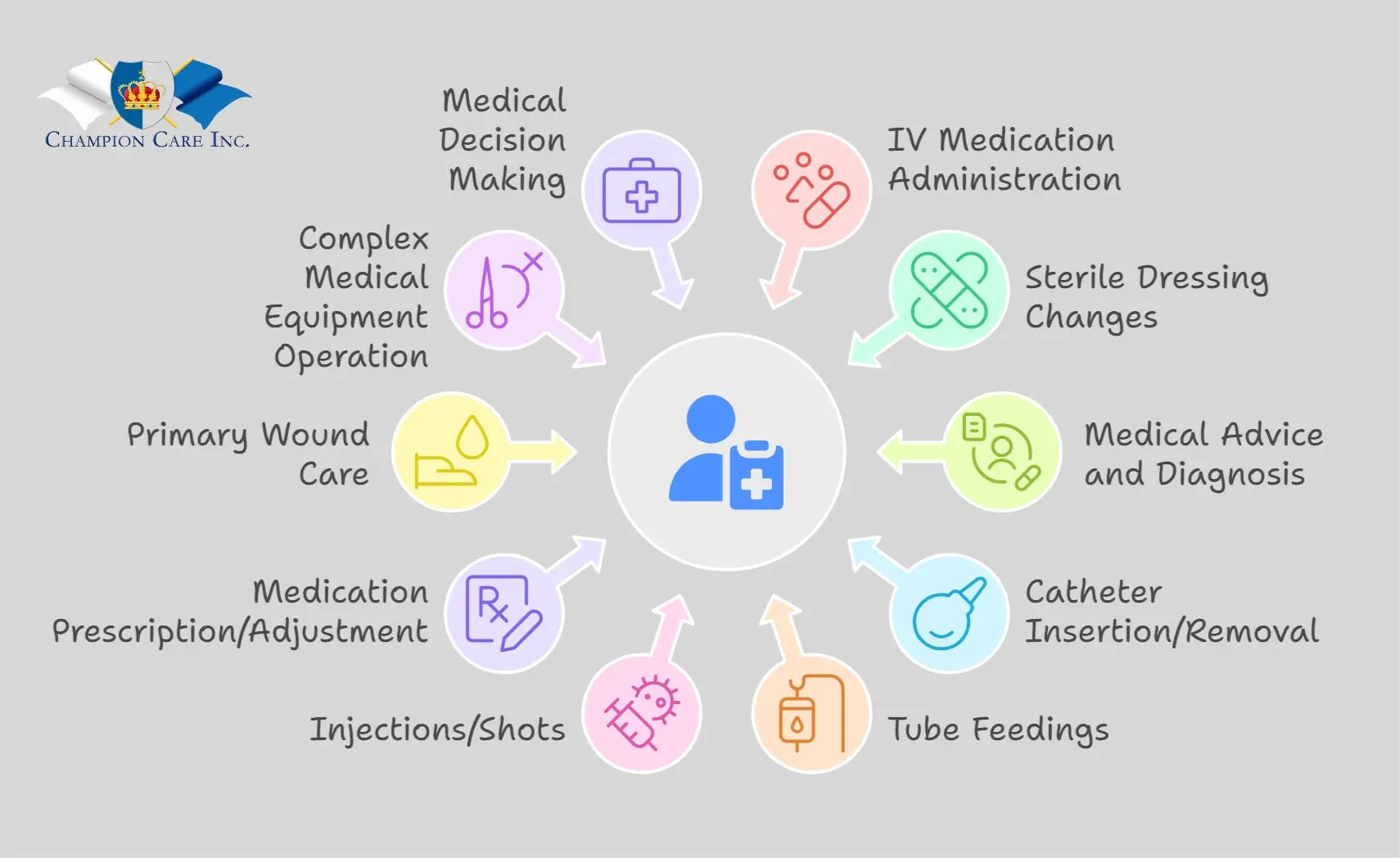
Home health aides are not authorized to perform medical tasks that require specialized training and licensure. Here are 10 things they are usually not allowed to do:
If your loved one requires assistance with any of these tasks, a nurse or other medical professional should be involved. Home health aides focus on personal care and help with daily living, but they don’t provide medical treatment.
Beyond the ten core limits above, families frequently ask about a few specific situations. Here’s where each one stands.
No. Administering insulin is an injection, and injections of any kind fall outside an HHA’s scope of practice. Insulin should be given by the client, a family member trained to do so, or a licensed nurse.
Yes, this one is different from the others. Assisting with incontinence care and changing briefs is considered personal hygiene support, not a medical task, so it’s a normal part of an HHA’s toileting assistance duties.
No. Tube feedings, including through a G-tube or NG-tube, require monitoring for complications like aspiration and must be handled by a licensed nurse or trained family caregiver.
No. Both are considered medical procedures that carry a risk of injury if done incorrectly, so they’re reserved for licensed nursing staff.
Generally, yes, for basic comfort, but only when it’s part of the client’s written care plan. If it’s tied to a medical treatment (for example, post-surgical care), a nurse should handle it instead.
Understanding what a home health aide can and cannot do is essential. These limits protect your loved one and make sure care is safe and legal. They also help families understand what to expect from aides, so there are no surprises.
By respecting these boundaries, families get safe and proper care. It also indicates when to engage skilled nursing or other medical professionals. Read this to learn how to increase home health aide hours.
Home health aides play a crucial role in helping individuals remain comfortable and safe in their own homes. They provide support with daily tasks and offer companionship. Knowing what they can do helps families choose the proper care and understand what to expect.
Home health aides assist with daily tasks such as bathing, dressing, and grooming. They also support light chores and offer reminders, making home life easier and safer.
Trained professionals, such as nurses and doctors, should always provide medical care. Home health aides offer daily support, rather than medical procedures or clinical tasks. Please read our article to learn more about the responsibilities and duties of a home care assistant.
Choosing the right home health aide means understanding these services and matching them to your loved one’s needs. For trusted, trained aides who follow all rules, consider providers such as Champion Care Inc.
Families searching for a fast answer often just want a simple checklist. This table summarizes the boundaries explained above in a single scannable view.
| Home Health Aides CAN Do | Home Health Aides CANNOT Do |
| Help with bathing, dressing, and grooming | Change or apply sterile wound dressings |
| Assist with toileting and incontinence care | Administer injections, including insulin shots |
| Remind clients to take medication | Give or adjust prescription medication |
| Prepare simple meals and light housekeeping | Insert, remove, or manage catheters |
| Help with safe transfers and mobility | Perform tube feedings |
| Provide companionship and emotional support | Diagnose conditions or give medical advice |
Sometimes, home health aides are not enough to meet a person’s medical needs. Skilled nursing provides a higher level of care for individuals who require specialized medical treatments and close monitoring. Knowing when to choose skilled nursing is key to proper care.
Skilled nursing involves care provided by licensed nurses, such as Registered Nurses (RNs) or Licensed Practical Nurses (LPNs). These nurses can perform medical procedures, such as administering injections, managing wounds, and monitoring vital signs. They also adjust treatments based on a patient’s condition.
If your loved one needs medical tasks that a home health aide cannot perform, like IV therapy, catheter care, or complex medication management, it’s time to seek skilled nursing. Sometimes, families choose to combine skilled nursing with home health aide services. This way, medical needs are met while personal care and companionship continue.
Champion Care Inc. offers assessments to help families determine the level of care they need. Their team can recommend the best mix of services to keep your loved one safe and comfortable at home.
Knowing when skilled nursing is necessary helps prevent health complications and ensures that care matches your loved one’s needs.
Selecting the right caregiver is crucial to obtaining the best support for your loved one. There are essential factors to consider to ensure the caregiver is trustworthy, skilled, and a good fit for your family’s needs.
Start by checking the caregiver’s licensing and certifications. A valid license indicates that the individual has received the necessary training and meets state standards. Background checks are also essential to ensure safety and reliability.
Training matters a lot. The best aides have completed thorough programs and have experience in personal care. Ask about their skills and the type of care they have provided in the past.
It’s also important to consider personality and communication. The caregiver should be patient, kind, and respectful. Good communication helps build trust and makes daily care easier. Read this to know about the duties and responsibilities of caregivers towards the elderly.
Champion Care Inc. carefully vets each caregiver. Their process includes licensing verification, background checks, and skill assessments. They also match caregivers to clients based on needs and preferences.
Choosing the right caregiver brings peace of mind and ensures your loved one feels comfortable and cared for. Don’t hesitate to ask questions; contact us today to make an informed decision.
Choosing the proper care for your loved one is a crucial decision. Understanding what home health aides can and cannot do helps you make wise choices. Asking questions and knowing the limits of care are appropriate; they keep everyone safe and comfortable.
Home health aides offer valuable support with daily tasks but don’t perform medical duties. When medical care is needed, skilled nurses step in to provide care. Knowing these boundaries helps families set clear expectations.
If you feel unsure or need help finding the proper care, reach out. Champion Care Inc. is here to guide you with trusted advice and quality services. Getting the right help can make a big difference in your loved one’s life.
No, home health aides can remind clients to take their medication, but they are not allowed to administer or adjust it. Licensed nurses handle those tasks.
Home health aides can assist with basic hygiene, but are not authorized to perform primary wound care or change sterile dressings. These require medical training.
Home health aides provide personal and non-medical care to individuals in their homes. Certified Nursing Assistants (CNAs) receive more comprehensive medical training and are authorized to perform specific skilled nursing tasks.
If medical treatments like injections, IV therapy, or complex wound care are needed, skilled nursing care is required. A professional assessment can help decide.
No. Insulin is given by injection, and HHAs are not permitted to administer any injections. This should be done by the client, a trained family member, or a licensed nurse.
Yes. Incontinence care and changing briefs are considered personal hygiene assistance rather than a medical task, so they fall within a home health aide’s normal duties.
Sometimes, for simple non-sterile dressings, and only if it’s specifically included in the client’s care plan. Reinforcing is different from changing a dressing and never applies to sterile or surgical wounds.
No. The rule is the same across home health aides, personal care assistants, and most CNAs: changing a sterile dressing requires nursing-level infection-control training that these roles do not include.
